More than Storage: Smart Shoe Cabinets That Finally Understand My Daily Routine
Stepping into a home where your shoes are always in place, matched to the weather, and ready for your next move—doesn’t that feel just a little more you? I used to waste mornings digging through clutter, until I discovered smart shoe cabinets that do more than hold footwear. They learn, adapt, and quietly streamline my life. No hype, no complexity—just simple, thoughtful tech that gets my rhythm. This isn’t about gadgets; it’s about reclaiming peace, one step at a time.
The Morning Chaos No One Talks About
Let’s be honest—how many of us have stood in our entryway, one sock on, one shoe missing, frantically shoving boxes aside while the clock ticks? I used to think this was just part of being a busy woman. Between school drop-offs, work calls, and errands, I barely had time to breathe, let alone keep my shoe collection in order. For years, I accepted the chaos as normal. But then I started paying attention. I timed myself one week—just how long did I actually spend looking for shoes, matching pairs, or wiping off mud before heading out? The answer shocked me: nearly ten minutes every single morning. That’s over an hour a week. Over a year, that’s more than 60 hours—almost a full workweek—lost to shoe stress.
And it wasn’t just the time. It was the mental toll. That frantic scramble set the tone for my entire day. I’d leave the house already frazzled, carrying that low hum of frustration into meetings and conversations. My entryway, once meant to be a welcoming space, had become a stress zone. I started to wonder—what if the problem wasn’t me? What if it was the system? I wasn’t lazy or disorganized. I just didn’t have a system that worked with my life instead of against it. That’s when I began looking for something different—not just another storage box, but a solution that could actually understand my routine, my needs, and my pace.
Turns out, I wasn’t alone. So many women I’ve talked to—mothers, professionals, caregivers—share this quiet struggle. We’re expected to manage everything, but rarely given tools that truly help. We buy organizers, label bins, and declutter every few months, only to fall back into the same cycle. The truth is, life doesn’t slow down. Kids grow, schedules shift, weather changes. A static system can’t keep up. What we need isn’t more willpower. We need smarter design—technology that doesn’t complicate things but quietly lifts the load. That’s exactly what I found when I finally tried a smart shoe cabinet.
How a Simple Cabinet Learned My Habits
When I first heard about smart shoe cabinets, I’ll admit—I was skeptical. The word “smart” usually means complicated. Apps to download, updates to install, passwords to remember. The last thing I needed was another tech gadget demanding my attention. But this wasn’t like that at all. The cabinet I chose uses low-energy sensors and pattern recognition—not artificial intelligence shouting commands, but gentle awareness. It doesn’t need me to tell it what to do. It just watches, learns, and adapts.
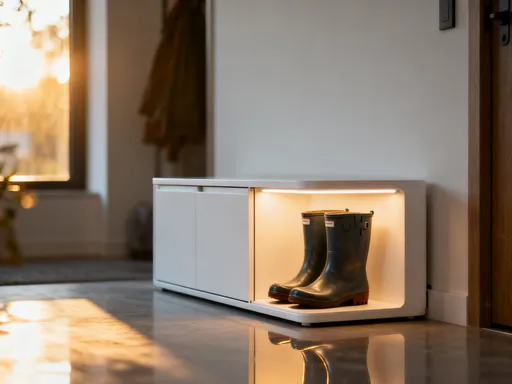
Within two weeks, it knew my rhythm. It noticed I grabbed my running shoes every Tuesday and Thursday morning—gym days. It saw that I reached for my loafers on Mondays and Wednesdays—big meeting days. And when the humidity spiked or the sky darkened, it began lighting up near my waterproof boots before I even checked the weather. One morning, I was about to grab my flats, and the cabinet softly illuminated the shelf where my ankle boots live. The weather app still said “partly cloudy,” but ten minutes later, the rain started. I stood there, umbrella in hand, amazed. This wasn’t automation. This was anticipation.
What surprised me most was how little effort it took. I didn’t have to program it or sync it with my phone. I just used it—naturally, the way I always had. The sensors tracked usage patterns, temperature, and even humidity inside the cabinet. Over time, it built a quiet understanding of my life. It didn’t judge or nag. It just helped. And because it felt so seamless, I didn’t resist it. I trusted it. That’s the power of good design: it doesn’t ask you to change. It changes with you.
Personalization That Feels Like Being Understood
Here’s the thing about most tech—it feels cold. It gives you data, not care. But this cabinet? It feels different. It’s like having a thoughtful friend who knows your habits and quietly helps you show up as your best self. Some models have adaptive lighting—soft, warm glow in the morning to ease you into the day, brighter light when it senses you’re in a rush. Mine has a feature that syncs with my calendar. If I have a video call scheduled, it gently reminds me to choose a polished pair. Not because I need to impress anyone, but because I feel more confident when I look put together.
One of my favorite moments happened last month. I had a big presentation, and the night before, the cabinet lit up with a soft chime and a small indicator near my oxfords. I looked closer—there was a tiny note on the display: “Time to shine?” I laughed. It was right. My shoes were dull, and a quick polish would make me feel more prepared. I did it, and the next day, I walked into that meeting feeling calm and capable. Was it the shoes? Maybe not. But the gesture—the feeling of being seen—made all the difference.
That’s what sets this apart. It’s not about efficiency alone. It’s about emotional support disguised as technology. It remembers that I wear my red flats when I feel bold. It knows I avoid heels on days when my daughter has soccer practice—probably because I know I’ll be sprinting across the field. It doesn’t just store shoes. It holds little pieces of my story. And in doing so, it helps me move through my day with more grace, more confidence, and less friction.
Information Without the Noise
One of the biggest frustrations with modern tech is the overload. We get notifications for everything—emails, updates, reminders, promotions. Our phones buzz constantly, pulling us in ten directions at once. I didn’t want another source of noise. What I wanted was clarity. And that’s exactly what this cabinet delivers—not constant alerts, but thoughtful, timely insights.
Every Sunday evening, I get a short message on my phone—just one. “This week: You walked 14 miles—great job! Your navy sneakers could use some airing. And you haven’t worn your sandals in 3 weeks.” That’s it. No graphs, no dashboards, no pressure. Just a friendly nudge, like a note from a贴心 friend. I started paying more attention to my shoe care. I rotated pairs more often, let them breathe, treated the leather. As a result, my shoes last longer. I’ve saved money, yes—but more importantly, I feel more in control.
What I love is that the feedback feels personal, not robotic. It doesn’t say “user wore sneakers 4.2 times this week.” It says “your favorite pair is ready for a break.” That small shift in language makes all the difference. It’s not monitoring me. It’s looking out for me. And because it feels kind, I actually listen. I find myself making better choices—not because I’m being scolded, but because I’m being supported.
Design That Blends Into Real Life
Tech should serve life, not dominate it. I’ve seen smart devices that look like they belong in a lab—glossy black, flashing lights, buttons everywhere. I didn’t want that in my home. My entryway is a shared space, a first impression. It should feel warm, inviting, calm. That’s why I chose a cabinet with a natural walnut finish, soft-close doors, and hidden sensors. From the outside, it looks like a beautiful piece of furniture—something you’d find in a cozy home magazine. Guests don’t say, “Oh, is that a smart cabinet?” They say, “Your entryway feels so peaceful.”
The interface is minimal. No screens, no apps unless you want them. Most of the time, I don’t even think about it as “smart.” I just open it, grab my shoes, and go. The tech works in the background, quietly doing its job. The lighting is subtle—just enough to guide me on dark mornings. The air circulation system runs silently, keeping shoes fresh without any effort on my part. It’s the kind of technology that disappears when it’s working well, which is exactly how it should be.
And because it blends in, it doesn’t feel like a gadget. It feels like part of the home. My daughter doesn’t play with buttons. My dog doesn’t knock it over. It’s sturdy, practical, and beautiful. It proves that smart design doesn’t have to be flashy. Sometimes, the most powerful tech is the kind you forget is there—until it does something quietly brilliant, like reminding you to wear your rain boots before the storm hits.
Small Tech, Big Ripple Effects
I didn’t expect one change to shift so much. But once my morning shoe routine became smooth, other things started to fall into place. I wasn’t rushing as much. I had time to make a proper breakfast, pack my daughter’s lunch without stress, even sip my coffee while it was still hot. That calm at the start of the day carried through. I felt more focused at work, more patient with my family, more present in my own life.
My partner noticed. He saw how much easier my mornings had become and asked, “What else could we simplify?” We started small. He got a smart key holder that glows when you’re about to leave without your keys. Then we added a shared digital grocery list that updates in real time. We didn’t overhaul our lives—we just made tiny upgrades that reduced friction. And slowly, our home began to feel more intentional, more supportive.
What surprised me most was how it brought us closer. We weren’t just solving problems—we were designing a life we both loved. We started talking more about what made us feel calm, what drained our energy, what small changes could make a big difference. That shoe cabinet didn’t just organize my footwear. It sparked a conversation about how we want to live. And that, more than anything, has been priceless.
Why This Matters Beyond Convenience
At the end of the day, this isn’t really about shoes. It’s about creating a home that works for you, not against you. It’s about designing a life where the small things—getting dressed, leaving the house, feeling prepared—don’t become sources of stress. When your environment supports you, you have more space—for creativity, for connection, for joy. You’re not fighting your home. You’re living in harmony with it.
The best technology doesn’t shout. It listens. It observes. It adapts. It doesn’t demand your attention; it gives you back time. And sometimes, in the quietest moments—like a soft light guiding you to the right pair of boots—it reminds you that you’re seen, that your rhythm matters, that your peace is worth designing for.
I used to think smart homes were for tech lovers or people with endless time and money. Now I know they’re for anyone who wants to feel more at ease in their own life. You don’t need a mansion or a fortune. You just need one small change that makes your day a little smoother, a little calmer, a little more you. And sometimes, that change starts with a single step.