After Tracking 7 Menopause Symptoms for 3 Months, This App Helped My Daughter Understand Me Better
Life changes quietly—especially during menopause. One day you're fine; the next, you're overwhelmed by mood swings, sleepless nights, or sudden heat flashes. I struggled silently until I started using a simple app to track my symptoms. What surprised me most wasn’t just how it improved my daily comfort—it was how it opened up heartfelt conversations with my daughter. Technology didn’t just support my health; it brought us closer. And if you’ve ever felt misunderstood during this phase, you’re not alone. This is how a little digital tool changed everything—not because it’s flashy, but because it helped my family see me more clearly.
The Quiet Shift: When Menopause Changed My Daily Rhythm
It wasn’t one big moment that told me menopause had arrived. It was a series of small things adding up, like puzzle pieces I didn’t want to put together. I’d wake up drenched, my nightgown sticking to my back, heart racing for no reason. Some mornings, I’d feel foggy, like I’d forgotten how to make coffee—even though I’d done it a thousand times. And my moods? They shifted like the wind. One minute I’d be laughing at a silly cat video, the next, I’d feel tearful over nothing at all.
At first, I blamed it on stress. Work was busy. The house needed cleaning. Life, as usual, kept moving. But the fatigue didn’t go away. I’d sit on the couch after dinner, too drained to watch my favorite show. My daughter would ask, “Are you okay, Mom?” and I’d force a smile and say, “I’m fine.” But I wasn’t. I didn’t even know how to explain what was happening—because I didn’t understand it myself.
What hurt the most wasn’t the hot flashes or the tiredness. It was the feeling of being invisible. My daughter, bless her heart, tried to be supportive, but she didn’t get it. When I snapped after she left her shoes in the hallway—again—I could see the confusion in her eyes. She didn’t see hormones or biology. She saw me as “short-tempered” or “overreacting.” And maybe I was. But it wasn’t for the reasons she thought.
I started to withdraw. I’d cancel plans. I’d skip family dinners. Not because I didn’t love being with them—but because I was afraid of how I might feel, or how I might act. I didn’t want to be “that mom” who’s always moody or tired. But the more I pulled back, the more disconnected we became. It wasn’t her fault. It wasn’t mine either. We just didn’t have a way to talk about what was really going on.
From Confusion to Clarity: Discovering a Symptom-Tracking App
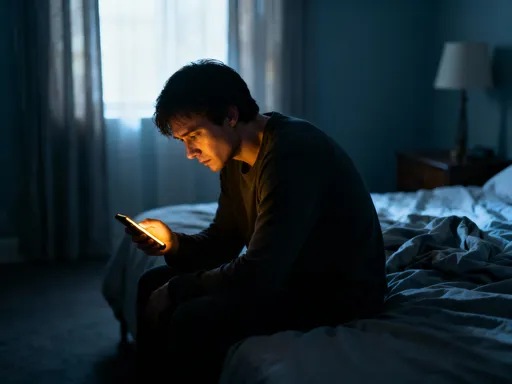
The turning point came on a Tuesday morning after a particularly rough night. I’d woken up three times, drenched and disoriented. I spilled coffee on my blouse, burned my toast, and cried over a text from my sister that was perfectly fine. That’s when I thought, There has to be a better way. I wasn’t looking for a cure—I just wanted to understand what was happening to my body.
I started searching online, not for miracle fixes, but for tools that could help me make sense of the chaos. That’s when I found a symptom-tracking app designed specifically for women going through perimenopause and menopause. I’ll be honest—I wasn’t optimistic. I’ve downloaded plenty of apps that promised a lot and delivered little. But this one felt different from the start.
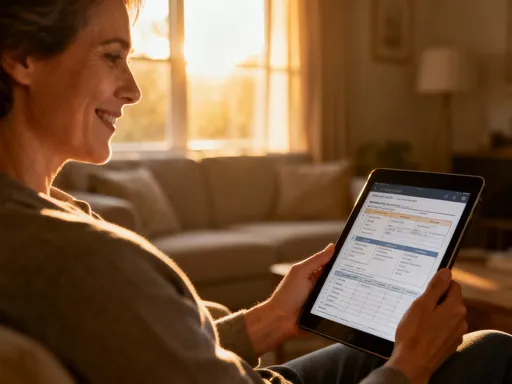
It didn’t ask for a blood test or a doctor’s referral. It didn’t bombard me with ads or complicated charts. Instead, it asked simple questions every evening: How did you sleep? What was your energy like? Any hot flashes? Mood changes? It took less than five minutes a day. I could answer while brushing my teeth or waiting for the kettle to boil. And slowly, over weeks, something amazing happened—patterns began to emerge.
I noticed that my worst mood swings followed nights with poor sleep. That my energy dipped sharply on days when I skipped breakfast. That heat flashes were more likely on stressful days at work. None of this was rocket science, but seeing it laid out in color-coded graphs made it real. For the first time, I wasn’t guessing. I wasn’t blaming myself. I had data—gentle, compassionate data—that helped me make better choices.
But the real surprise came when I realized I could share it. Not just with my doctor, but with my family. That’s when I thought—What if my daughter could see this too? Not to justify my feelings, but to help her understand them. Because sometimes, love isn’t enough. Sometimes, you need a little clarity.
A Shared Screen, A Deeper Conversation: How Tech Bridged the Gap with My Daughter
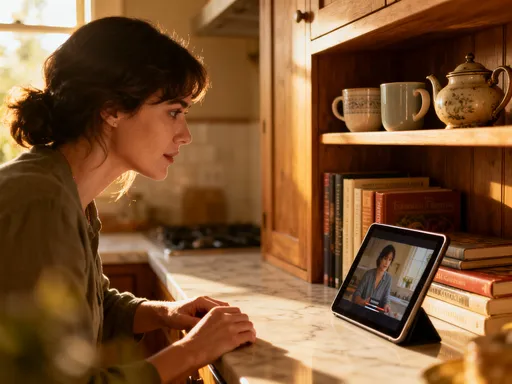
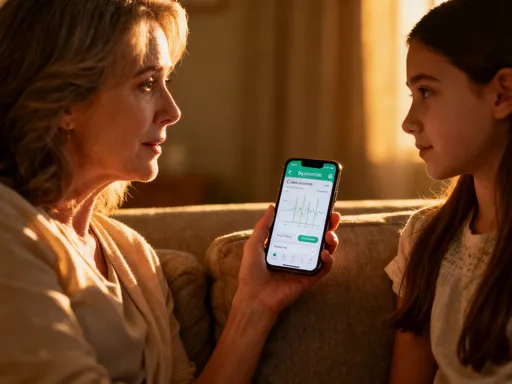
One Sunday afternoon, my daughter came over with takeout. We were catching up on the couch when I said, “Hey, can I show you something?” I opened the app and pulled up my weekly summary. It showed a simple line graph: sleep quality in blue, mood in green, and energy in yellow. The dips and peaks told a story my words never could.
“This,” I said, pointing to a low point on Tuesday, “was one of my tough days. I didn’t sleep at all. And look—my mood dropped hard. It wasn’t about you leaving your mug in the sink. It was about hormones and exhaustion. I love you. I just… couldn’t handle it in the moment.”
She stared at the screen, then at me. And then she said something I’ll never forget: “Now I get it.”
That simple sentence cracked something open. She wasn’t defensive. She wasn’t hurt. She was understanding. She looked at the chart and said, “So when you’re quiet or seem off, it’s not that you’re mad at me. It’s that your body’s going through something.” I nodded, tears in my eyes. “Exactly,” I said. “And I’m trying. Every day, I’m trying.”
That night, we didn’t solve menopause. But we solved something just as important—we rebuilt connection. The app didn’t replace our relationship. It enhanced it. It gave us a common language. Instead of me saying, “I’m tired,” and her hearing, “You’re boring,” she now hears, “My body is working hard, and I need a little grace.” And that makes all the difference.
Since then, she checks in differently. Instead of, “Why are you so quiet?” she’ll say, “How was your sleep last night?” Or, “Do you need a quiet evening?” Those small shifts in tone? They come from understanding. And understanding comes from seeing the full picture—not just the moment I snapped, but the week of sleepless nights that led to it.
Beyond Tracking: Using Reminders and Mood Notes to Stay Balanced
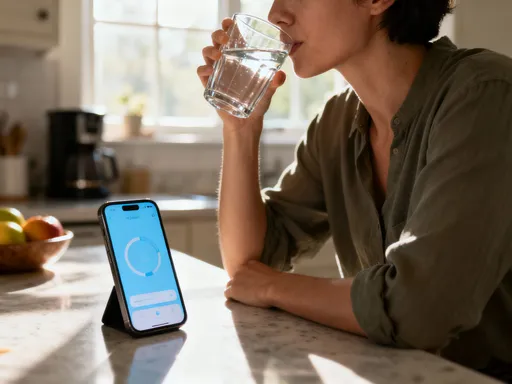
The app didn’t stop at tracking. It also had little nudges—gentle reminders that felt more like a friend than a robot. “Time to drink water,” it would say at 3 p.m. Or, “How about a five-minute walk outside?” At first, I ignored them. But then I tried one. I stepped into the garden, phone in hand, and walked slowly around the roses. When I came back, I felt calmer. Lighter. I typed a note into the app: “Felt peaceful after garden walk. Sun was warm. Birds singing.”
Those personal notes became my secret weapon. They weren’t just logs—they were moments of reflection. On hard days, I’d scroll back and read them. “Remember how good the garden felt?” I’d tell myself. “You’ve gotten through tough days before.” It was like keeping a kindness journal, but one that also tracked my biology.
The reminders helped me build small, sustainable habits. Drink more water. Stretch for five minutes. Breathe deeply before bed. None of these were huge changes, but together, they made a difference. I started sleeping a little better. My energy stabilized. And when a hot flash did hit, I was less afraid of it. I’d think, This will pass. It’s not forever.
But here’s the part I didn’t expect: I started sharing those notes with my daughter. Not every one, but the meaningful ones. “Today I felt calm after walking in the garden,” I texted her once. “Thank you for reminding me to go outside.” She replied with a heart and said, “I’m so glad, Mom. Maybe we can walk together this weekend?”
That’s when it hit me—this wasn’t just self-care. It was shared care. The app helped me take better care of myself, and in doing so, it helped me stay more present for her. And that’s worth more than any symptom relief.
Normalizing the Conversation: How Data Made Menopause Less Taboo at Home
Menopause wasn’t something we talked about in my house growing up. My mother never mentioned it. Neither did my aunts. It was like a secret club no one invited you to—until you were suddenly a member. So when I started going through it, I didn’t know how to talk about it. I didn’t want to seem “old” or “dramatic.” And I certainly didn’t want my daughter to worry.
But the app changed that. Because now, menopause wasn’t just a feeling—it was something we could see. It wasn’t abstract. It was real. And because it was real, we could talk about it.
My daughter started asking questions—not out of pity, but out of care. “Did you have a good night’s sleep?” she’d ask. Or, “Is this a high-symptom week? Should we plan something low-key?” I loved that she was thinking ahead. I loved that she wasn’t scared of the topic anymore.
One evening, she said, “Mom, can I see your chart again?” I pulled it up, and she studied it. “See this dip here?” she said. “That was the day we went shopping, and you seemed overwhelmed. I thought you were bored. But now I see—your energy was super low, and you’d had three hot flashes that day.”
“I was trying so hard to keep up,” I admitted. “I didn’t want to ruin our day.”
She hugged me. “You don’t have to hide it anymore,” she said. “We can plan around it. We can protect your energy. That’s what family does.”
And just like that, the shame I’d carried for months began to lift. Menopause wasn’t something to be ashamed of. It was a natural phase. And with the right tools, it could be navigated with dignity—and even grace.
Choosing the Right Tool: What to Look for in a Menopause Support App
Not every app is right for every woman. I tried a few before finding the one that worked for me. Some were too clinical, full of terms I didn’t understand. Others were cluttered with ads or tried to sell me supplements I didn’t need. What I wanted—and what I think most women want—is simplicity, privacy, and kindness.
Here’s what I’ve learned: look for an app that feels like a journal, not a medical report. It should be easy to log your symptoms—just a few taps a day. The interface should be clean, with clear visuals like charts or color codes. Avoid anything that feels overwhelming or judgmental.
Privacy is non-negotiable. Make sure the app doesn’t share your data with third parties. You should feel safe putting your most personal experiences into it. And if sharing is important to you, look for one that lets you generate simple, easy-to-understand summaries—perfect for showing your partner, daughter, or doctor.
Also, consider features that support emotional well-being, not just physical tracking. Mood notes, gratitude prompts, or gentle reminders for self-care can make a big difference. The best apps don’t just track—they support.
And please, don’t feel pressured to use every feature. Some women love detailed reports. Others just want to log a few things and move on. That’s okay. The goal isn’t perfection. It’s progress. It’s understanding. It’s finding what helps you feel more like yourself.
If you’re unsure where to start, ask your doctor or search for apps recommended by trusted women’s health organizations. Read reviews. Try a few. Delete the ones that don’t feel right. This is your journey. You get to choose the tools that fit your life.
More Than Relief: How Tech Can Strengthen Family Bonds During Life Transitions
Three months after I started using the app, my daughter gave me a gift. It was a small notebook with a note inside: “For all the things you want to remember—not just the hard days, but the good ones too.” I cried when I opened it.
That notebook now sits next to my phone. Sometimes, I write in it. Sometimes, I just flip through the pages. But every time I see it, I think of how far we’ve come—not just me, but us.
Menopause is often talked about as a personal challenge. And it is. But it’s also a relational one. It affects how we show up in our families, our friendships, our lives. When we suffer in silence, the people who love us can’t help. They can’t support us. They can’t understand.
But when we find ways to share our experience—whether through an app, a conversation, or a simple chart—we invite connection. We say, “This is what I’m going through. This is why I might seem different. This is how you can help.”
Technology doesn’t replace love. But it can deepen it. It can give us the words we don’t have. The clarity we crave. The compassion we need.
My daughter doesn’t see me as “difficult” anymore. She sees me as human. As strong. As someone navigating a big change with courage and grace. And that? That’s the greatest gift of all.
If you’re in the middle of menopause, feeling unseen or misunderstood, I want you to know this: you’re not alone. And you don’t have to stay silent. There are tools—simple, gentle, thoughtful tools—that can help you feel more in control. That can help your family understand you better. That can turn isolation into intimacy.
It won’t fix everything. But it might just open a door—one that leads to deeper conversations, more patience, and more love. And sometimes, that’s exactly what we need to keep moving forward, one small step at a time.