How Yoga and TCM Taught Me to Truly Care for My Body
For years, I chased quick fixes—pills, intense workouts, trendy diets—only to feel more drained. Then I discovered the quiet power of combining yoga, meditation, and traditional Chinese medicine (TCM) principles. It wasn’t magic, but a real shift in how I listened to my body. This isn’t about curing illness—it’s about daily care. What if the secret to feeling better wasn’t in fixing something broken, but in tuning in before things break down?
The Wake-Up Call: When My Body Said “Enough”
It started with fatigue that no amount of coffee could fix. Mornings became a battle—dragging myself out of bed, eyes heavy, mind foggy, and a low hum of anxiety already buzzing by 8 a.m. I was eating salads, going to spin classes, and taking vitamin supplements, yet I felt worse than ever. My body was sending signals, but I had trained myself to ignore them. Headaches, disrupted sleep, and constant irritability were normalized as part of being a busy woman managing home, work, and family.
The turning point came one rainy Tuesday when I found myself sitting on the bathroom floor, too exhausted to stand. No crisis, no diagnosis—just a deep, quiet realization: I could not keep going like this. I wasn’t sick, but I wasn’t well, either. Modern medicine offered blood tests that came back “within normal range,” but normal didn’t mean vibrant, joyful, or truly alive. That moment of stillness cracked open a space for honesty. I had been treating my body like a machine to be optimized, not a living system to be nurtured.
It was then I began to explore what real care might look like—not a cure, but a daily conversation with my body. I started reading about holistic approaches, not to replace medical advice, but to complement it. What I found was not a quick fix, but a slower, deeper path: one rooted in awareness, rhythm, and respect. This journey led me to two powerful traditions—yoga and Traditional Chinese Medicine (TCM)—that, when practiced together, helped me rebuild my relationship with my physical self.
Why Yoga Is More Than Stretching: The Mind-Body Reset
When most people think of yoga, they picture advanced poses—bodies bent into pretzels or balanced on one hand. But the heart of yoga is not performance; it’s presence. For me, the real transformation began with the simplest practices: Child’s Pose, Cat-Cow, and seated breathing. These gentle movements were not about burning calories or building muscle, but about reconnecting with the body’s natural intelligence. Each stretch became a question: Where am I holding tension? What does my body need right now?
Scientifically, yoga supports the nervous system by activating the parasympathetic response—the “rest and digest” state that counteracts chronic stress. When we move slowly and breathe deeply, the body shifts out of survival mode. This is especially important for women in midlife, who often carry the invisible weight of emotional labor, caregiving, and long-term stress. Yoga offers a daily reset, not through force, but through softness. Poses like Forward Fold or Legs-Up-the-Wall require no strength, only surrender. And in that surrender, something remarkable happens: the body begins to release what it has been guarding.
Over time, I noticed that my physical sensations carried emotional messages. A tight jaw wasn’t just from clenching—it reflected unspoken worries. A stiff lower back echoed the burden of responsibilities I never put down. Yoga didn’t erase these feelings, but it gave me a safe way to feel them. The mat became a mirror, showing me patterns I had ignored for years. This awareness didn’t come overnight. Some days, I moved with ease; other days, even simple stretches felt heavy. But consistency, not perfection, was the key. And with each practice, I learned to listen—truly listen—to what my body was saying.
Meditation That Actually Works: Simple Practices for Real Life
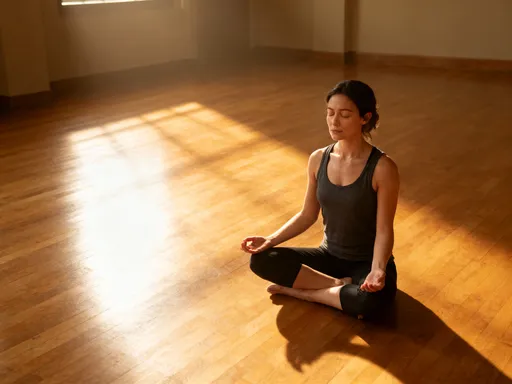
If yoga is the body’s language, meditation is the mind’s quiet translator. For years, I avoided meditation, convinced I was “bad at it.” I imagined it required sitting perfectly still for an hour, emptying my mind of all thoughts—a task that felt impossible, even absurd. But the truth is, meditation is not about stopping thoughts. It’s about changing your relationship with them. And the most effective practices are often the simplest: focusing on the breath, scanning the body, or walking mindfully from the kitchen to the living room.
I began with just five minutes each morning, sitting on a cushion by the window. My instruction was simple: notice the breath. When thoughts pulled me away—what to make for dinner, an unresolved email, a child’s upcoming school event—I gently returned to the sensation of air moving in and out. No judgment, no frustration. Just return. This small act created space between stimulus and reaction. I started to notice how often I responded to stress automatically—snapping at a loved one, skipping meals, scrolling endlessly on my phone. Meditation didn’t eliminate these habits, but it gave me a pause, a moment to choose differently.
Body scan meditations became especially powerful. Lying in bed before sleep, I would slowly bring attention to each part of my body, from toes to scalp. This practice revealed tensions I didn’t know I was holding—tight shoulders, a clenched stomach, a furrowed brow. More than relaxation, it taught me to inhabit my body fully, not just rush through it. Over time, these short sessions accumulated. Just as brushing your teeth prevents cavities, daily meditation supports mental resilience. It’s not a luxury; it’s maintenance. And for women juggling multiple roles, that daily grounding can be the difference between burnout and balance.
Traditional Chinese Medicine: Understanding Your Body’s Rhythm
While yoga and meditation helped me tune in, Traditional Chinese Medicine (TCM) gave me a framework to understand what I was hearing. TCM is not a replacement for Western medicine, but a different lens—one that views the body as an interconnected ecosystem governed by energy, rhythm, and balance. Central to this system is the concept of Qi (pronounced “chee”), the vital life force that flows through the body along pathways called meridians. When Qi flows smoothly, we feel energized and calm. When it’s blocked or depleted, we experience fatigue, mood swings, or physical discomfort.
Another key principle is the balance of Yin and Yang—opposing yet complementary forces. Yin represents rest, nourishment, and stillness; Yang stands for activity, heat, and movement. In modern life, many of us live in a state of Yang excess: over-scheduled, overstimulated, and under-rested. TCM doesn’t label this as illness, but as imbalance. And imbalance, according to this tradition, begins long before disease appears. Signs like trouble falling asleep, dry skin, or afternoon crashes are not just annoyances—they’re signals that the body’s rhythm is off.
TCM also views organs not just as physical structures, but as energetic systems with emotional and functional roles. For example, the Liver in TCM governs the smooth flow of Qi and is closely tied to emotions like frustration and anger. When Liver Qi becomes stagnant—often due to stress or emotional suppression—it can manifest as tension headaches, irritability, or menstrual discomfort. The Spleen, responsible for transforming food into energy, is affected by overthinking and irregular eating. When weakened, it may contribute to fatigue and bloating. These concepts aren’t meant to diagnose, but to deepen awareness. They invite us to ask: How do my habits affect my energy? Am I giving my body the rest it needs? By framing health as a dynamic flow rather than a static state, TCM encourages daily attention, not crisis intervention.
Combining Forces: How Yoga and TCM Complement Each Other
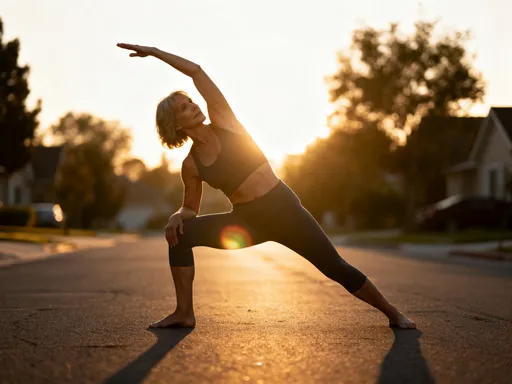
What makes yoga and TCM so powerful together is their synergy. Yoga supports the free flow of Qi through intentional movement and breath. Each pose opens specific meridians; each breath circulates energy. For example, gentle twists stimulate the Liver and Gallbladder meridians, helping to release emotional stagnation. Forward bends nourish the Kidneys, which in TCM store vital essence and are depleted by chronic stress. Even the rhythm of a yoga practice—beginning with grounding, moving into flow, and ending with stillness—mirrors the natural cycles of energy in the body.
Meditation, in TCM terms, calms the Shen—the spirit or mind. A restless Shen shows up as insomnia, anxiety, or mental overactivity. By practicing stillness, we anchor the Shen, allowing it to settle like sediment in a stirred jar of water. This is especially important in a world of constant noise and digital distraction. When the Shen is calm, the body can repair. When the body is open, Qi can move. The two practices feed each other: yoga prepares the body for meditation, and meditation deepens the awareness cultivated in yoga.
One of the most meaningful shifts came when I began to tailor my practice to how I felt each day, not to a rigid routine. On days when I felt emotionally overwhelmed—classic signs of Liver Qi stagnation—I focused on lateral stretches and deep breathing, avoiding intense backbends that might aggravate tension. When I felt fatigued and scattered, signs of Spleen Qi deficiency, I chose restorative poses and ate warm, cooked meals, honoring the body’s need for nourishment. This wasn’t about fixing myself, but about responding with care. Over time, I stopped seeing my body as a problem to solve and started seeing it as a partner in wellness—one that communicates if I’m willing to listen.
A Daily Body Care Routine You Can Actually Stick To
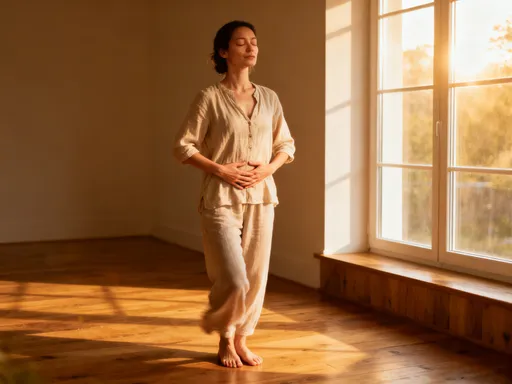
Transformation doesn’t require hours of practice or radical lifestyle changes. What matters is consistency, not intensity. The routine I’ve built isn’t perfect, but it’s sustainable—and that’s what makes it effective. It begins with five minutes of breathwork each morning, before checking my phone. Sitting upright, I inhale for four counts, hold for four, exhale for six. This simple pattern signals safety to the nervous system, setting a calm tone for the day.
Midday, I take a ten-minute movement break. This might be a short yoga sequence—Cat-Cow, Standing Forward Bend, gentle twists—or a mindful walk around the block. The goal isn’t exercise, but reconnection. I notice the feel of my feet on the ground, the air on my skin, the rhythm of my breath. These moments interrupt the autopilot mode of daily tasks and bring me back to my body.
In the evening, I shift toward nourishment and release. Dinner is warm and easy to digest—soups, stews, or steamed vegetables—aligning with TCM principles of supporting digestion. Afterward, I do a short body scan or rest in Legs-Up-the-Wall pose for ten minutes. This posture gently reverses blood flow, reduces leg swelling, and calms the nervous system—ideal after a long day of standing or sitting. Before bed, I reflect quietly: How did my body feel today? What did it need that it didn’t get? This isn’t self-criticism; it’s curiosity. And on nights when I skip the routine, I offer kindness, not guilt. Wellness is not punishment. It’s a practice of returning, again and again, with compassion.
Listening Is Healing: The Long-Term Shift in How I Treat My Body
The changes I’ve experienced—more energy, better sleep, greater emotional resilience—are not miracles. They are the natural result of showing up, day after day, with attention and care. I no longer chase wellness as a destination. Instead, I see it as a relationship—one that requires patience, honesty, and ongoing effort. Some days, my body feels strong and light. Other days, it asks for rest, and I’ve learned to say yes.
What I’ve gained most is not a perfect routine, but a deeper trust—in my body’s wisdom, in the power of small actions, and in the value of slowing down. I no longer view fatigue as a failure, but as feedback. A headache isn’t just something to mask with medication; it’s an invitation to examine my pace, my stress, my boundaries. This shift didn’t happen quickly, but it has been lasting.
I share this not as a prescription, but as an invitation. Your body speaks, too. It tells you through tension, through cravings, through the quality of your sleep. The practices of yoga and TCM are not about achieving perfection, but about cultivating presence. They remind us that care is not something we do only when we’re broken—it’s something we offer every day, like tending a garden. And just as a garden thrives with regular attention, so does the body.
If you’re feeling drained, overwhelmed, or simply disconnected, know this: healing begins with listening. You don’t need to overhaul your life. Start with one breath. One stretch. One moment of stillness. Let that be enough. And if you ever face health concerns, always consult a qualified healthcare provider—these practices are companions to care, not substitutes. But within the quiet, there is power. In tuning in, we reclaim our rhythm. And in honoring our bodies, we rediscover what it means to feel truly, deeply well.