How I Fixed My Daily Energy Slump with Simple TCM Moves
For years, I felt constantly drained—afternoon crashes, brain fog, low motivation. I tried coffee, naps, even strict diets, but nothing stuck. Then I discovered traditional Chinese medicine (TCM) doesn’t just treat symptoms; it balances your whole system. The real game-changer? Simple daily movements rooted in TCM principles. No intense workouts, no magic pills—just gentle, intentional exercises that actually work. This is what finally brought my energy back.
The Hidden Cause of Chronic Fatigue
In Western thinking, fatigue is often reduced to a simple equation: not enough calories, sleep, or oxygen. When energy dips, the solution seems obvious—drink more coffee, sleep longer, or push through with willpower. Yet for millions, these fixes provide only temporary relief. The truth, according to traditional Chinese medicine (TCM), lies deeper than surface-level habits. Chronic fatigue is not just about how much you do, but how your body manages the flow of vital energy, known as qi (pronounced “chee”). When this flow becomes sluggish or blocked, the result is persistent tiredness, mental fog, and emotional flatness—symptoms that no amount of caffeine can truly resolve.
TCM views the body as an interconnected network of energy channels, or meridians, each linked to specific organs and functions. Unlike the Western model, which sees energy as a product of food and oxygen, TCM teaches that qi is generated, circulated, and stored through the harmonious function of organ systems—particularly the spleen and liver. The spleen, in TCM, is not just a physical organ but a functional system responsible for transforming food and sensory input into usable energy. When the spleen qi is weak, digestion slows, nutrients aren’t properly absorbed, and mental clarity suffers. This is why someone can eat well and still feel drained—the body isn’t converting fuel efficiently.
Equally important is the liver’s role in smoothing the flow of qi throughout the body. In TCM, the liver ensures emotional balance and physical ease by preventing stagnation. Modern life, however, constantly challenges this function. Long hours at a desk, emotional stress, irregular meals, and excessive screen time all contribute to liver qi stagnation. When this occurs, energy becomes trapped, leading to irritability, tension, and the familiar midday slump. Unlike a mechanical system that can be jump-started, the body responds best to balance, not force. Stimulants like caffeine may create a brief surge, but they often worsen the imbalance over time by overtaxing the adrenal and liver systems.
The key insight from TCM is that chronic fatigue is rarely a deficiency—it’s a blockage. The body may have ample resources, but if qi cannot flow freely, those resources remain inaccessible. This explains why rest alone doesn’t always restore energy. What the body truly needs is regulation: gentle practices that encourage smooth circulation, support organ function, and restore natural rhythm. Rather than seeking external boosts, the path to sustained energy lies in cultivating internal harmony. This shift in perspective—from stimulation to regulation—forms the foundation of lasting vitality.
Why Movement Matters in TCM Adjustment
In today’s fitness culture, movement is often equated with intensity. Sweating, heart-pounding workouts, and measurable progress dominate the narrative. Yet in traditional Chinese medicine, the value of movement is measured not by exertion, but by its quality and intention. TCM does not advocate for pushing the body to its limits; instead, it emphasizes gentle, mindful motion that supports the body’s innate ability to self-regulate. This subtle but powerful distinction is what makes TCM-based movement uniquely effective for restoring energy.
The core principle is simple: movement circulates qi. When the body remains still for long periods—whether sitting at a desk or lying in bed—energy begins to stagnate. This stagnation affects both physical and emotional well-being. Muscles stiffen, digestion slows, and mental clarity diminishes. TCM teaches that specific movements, postures, and rhythms can activate meridians, unblock stagnation, and rekindle the body’s natural flow. Unlike high-intensity exercise, which can deplete qi in already fatigued individuals, gentle motion nourishes it.
Scientific research supports this ancient wisdom. Studies on low-impact movement, such as tai chi and qigong, have shown measurable improvements in autonomic nervous system function. These practices enhance parasympathetic activity—the “rest and digest” state—while reducing stress hormones like cortisol. One 2018 meta-analysis published in the Journal of the American Geriatrics Society found that regular, gentle movement significantly improved energy levels, sleep quality, and mood in adults over 50. The benefits were particularly pronounced in individuals with chronic fatigue or stress-related conditions.
What makes TCM movement different is its focus on coordination—between breath, body, and awareness. A simple arm raise, when done with deep abdominal breathing and focused attention, becomes more than a stretch; it becomes a method of directing qi. Each motion is designed to follow the natural pathways of the meridians, encouraging energy to move where it’s needed most. For example, rotating the torso gently stimulates the gallbladder and liver meridians, which run along the sides of the body. Tapping the arms or legs activates the large intestine and bladder channels, supporting elimination and circulation.
The beauty of this approach is accessibility. These movements require no special equipment, space, or fitness level. They can be done in pajamas, at a desk, or even in bed. What matters is consistency and intention. Even five minutes of mindful practice each day can reset the body’s energy system, much like rebooting a computer that’s been running slowly. Over time, these small actions accumulate, restoring balance and preventing the daily crashes that so many accept as normal. Movement, in the TCM sense, is not a workout—it’s a daily tune-up for the body’s energy engine.
The Morning Reset: Waking Up Your Spleen Qi
How you start your day sets the tone for your energy levels long after breakfast. In TCM, the hours between 7 and 9 a.m. are governed by the stomach meridian, closely linked to the spleen system. This is the optimal window for jumpstarting digestion and mental clarity. A sluggish spleen means sluggish thinking, poor nutrient absorption, and a body that feels heavy by mid-morning. The good news? A short, intentional routine can activate spleen qi and set the day on a steady, sustained course.
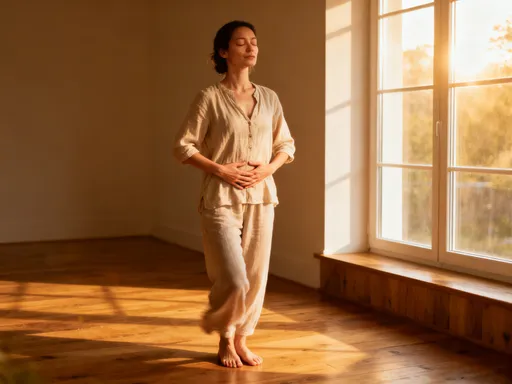
The morning reset is a 6-minute sequence designed to warm the body, stimulate digestion, and clear mental fog. It begins with a simple yet powerful act: rubbing the hands together. Stand or sit comfortably, close your eyes, and rub your palms vigorously for 30 seconds. This generates warmth, which in TCM is essential for moving qi and blood. Once your palms are warm, place them over your lower abdomen, just below the navel. Hold this position for a full minute, breathing deeply into the belly. This action sends warmth to the spleen and stomach, signaling the body to begin its digestive and energetic processes.
Next, perform a gentle stomach meridian tap. Using cupped hands, lightly tap from the lower ribs down to the pelvis, focusing on the central abdomen. Do this for one minute, maintaining a steady rhythm. This stimulation enhances circulation to the digestive organs and encourages the smooth transformation of food into energy. Follow this with slow torso rotations: stand with feet shoulder-width apart, arms relaxed at your sides. Gently rotate your upper body in a circular motion, first clockwise for 15 repetitions, then counterclockwise. Keep the movement small and controlled, feeling the stretch along the sides of your torso. This motion activates the spleen and stomach meridians, which run through the trunk.
Finally, incorporate abdominal breathing. Sit or stand with a straight spine. Inhale deeply through the nose, allowing the belly to expand fully. Exhale slowly through the mouth, drawing the navel toward the spine. Repeat for two minutes, focusing on slow, even breaths. This type of breathing massages the internal organs, improves oxygen exchange, and calms the nervous system. Together, these steps form a complete morning reset that takes less time than brewing coffee—but delivers longer-lasting energy. Practicing this routine daily trains the body to start each day with clarity, strength, and balance.
Midday Flow: Clearing Liver Qi Stagnation
By mid-afternoon, many people hit a wall. Energy plummets, focus fades, and the desire for sugar or caffeine grows strong. In TCM, this familiar crash is often a sign of liver qi stagnation. The liver meridian is most active between 1 and 3 a.m., but its influence extends throughout the day, especially during periods of mental strain. When emotional stress, decision fatigue, or physical tension accumulate, the liver’s ability to circulate qi becomes impaired. The result? Mental fog, irritability, and a body that feels both tense and exhausted at the same time.
The midday flow is a desk-friendly sequence of movements designed to release this stagnation and restore mental clarity. It requires no equipment, no standing, and can be done in as little as five minutes. Begin with shoulder rolls: sit upright, roll your shoulders forward in a smooth circle 10 times, then backward 10 times. This simple motion loosens the upper back and shoulders, areas where stress often settles. It also stimulates the gallbladder meridian, which runs over the shoulder and down the side of the arm.
Next, perform a gentle neck release. Slowly tilt your head to the right, bringing your ear toward your shoulder. Hold for three deep breaths, then switch sides. Follow with a forward neck stretch—chin toward chest, holding for three breaths. These movements relieve tension in the neck and upper spine, areas closely linked to the liver and gallbladder channels. They also improve blood flow to the brain, helping to clear mental fog.
Then, add side bends. Sit tall, interlace your hands and stretch them overhead, palms facing up. Gently lean to the right, feeling a stretch along the left side of your body. Hold for three breaths, then switch sides. This motion directly targets the liver and gallbladder meridians, which run along the flanks. It also encourages deep breathing and rib cage expansion, further supporting qi flow.
Complete the sequence with three deep breaths: inhale for four counts, hold for two, exhale for six. This extended exhale activates the parasympathetic nervous system, signaling the body to relax. Practicing this routine during a short break—after lunch, before a meeting, or when feeling overwhelmed—can prevent the 3 p.m. crash and sustain energy into the evening. Over time, these small movements help the body process stress more efficiently, reducing the buildup of stagnation that leads to fatigue.
Evening Wind-Down: Nourishing Yin and Calming the Mind
Modern life often ends in overstimulation. Screens, notifications, and lingering tasks keep the mind active long after the body should be winding down. In TCM, this pattern depletes yin—the cooling, nourishing aspect of energy that supports rest, repair, and emotional stability. When yin is deficient, sleep suffers, recovery slows, and energy remains unstable. The evening wind-down is an 8-minute practice designed to replenish yin, calm the heart qi, and prepare the body for deep, restorative rest.
The practice begins with slow toe raises. Sit in a chair with feet flat on the floor. Inhale as you slowly rise onto your toes, lifting the heels as high as comfortable. Exhale as you lower back down. Repeat 12 times, moving with full attention on the breath and the sensation in the legs. This gentle motion activates the kidney meridian, which begins on the sole of the foot. In TCM, the kidneys are the root of qi and yin, making this a foundational practice for long-term energy.
Next, perform the “palm-heaven lift.” Sit tall, arms at your sides. Inhale as you slowly raise your right arm in front of you, palm facing up, until it reaches shoulder height. Exhale as you lower it. Repeat with the left arm. Then, raise both arms together, palms up, as if offering something to the sky. Hold at the top for one breath, then lower slowly. This movement stretches the chest and shoulders, opens the lung meridian, and encourages the release of held emotions. It also promotes deep breathing, which calms the mind.
Follow with a seated spinal twist. Sit with legs together, feet on the floor. Inhale to lengthen the spine, exhale to gently twist to the right, placing your left hand on your right knee and your right hand behind you for support. Hold for three breaths, then switch sides. This twist massages the internal organs, aids digestion, and clears stagnation in the liver and spleen meridians. It also helps release physical tension stored in the spine.
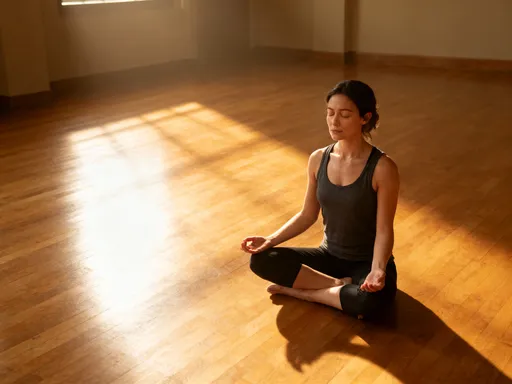
Finish with a minute of mindful breathing: eyes closed, hands resting on the lower abdomen. Inhale for four counts, exhale for six. Focus on the rise and fall of the belly. This final step signals the body to shift into rest mode, lowering heart rate and preparing for sleep. Practicing this sequence nightly creates a rhythm of release and renewal, helping the body recover from the day’s demands and wake up refreshed.
Making It Stick: Building a TCM-Aligned Routine
Knowledge is only powerful when applied consistently. The movements described are simple, but their effectiveness depends on regular practice. The good news is that TCM does not demand perfection—only presence. Building a sustainable routine is less about willpower and more about integration. Start by choosing one practice—morning, midday, or evening—and commit to it for seven days. Pair it with an existing habit: after brushing your teeth, before checking your phone, or during a scheduled break.
Environment matters. Practice in a quiet space with natural light if possible. Turn off notifications and let others know you need a few minutes of privacy. Use a timer to stay on track without watching the clock. Over time, expand to include all three practices, spacing them throughout the day. The goal is not to add stress, but to create moments of pause that restore balance.
Obstacles will arise. Some days, motivation will be low. On others, forgetfulness may take over. When this happens, respond with kindness, not criticism. Even one minute of movement is better than none. If you miss a day, simply begin again the next. Progress in TCM is measured in subtle shifts—better sleep, clearer thinking, less irritability—not dramatic transformations.
Over weeks and months, these small actions build a foundation of resilience. Energy becomes steadier, moods more balanced, and the body more responsive to rest. The routine becomes less of a chore and more of a gift—a daily act of self-care that honors the body’s need for rhythm and harmony.
Beyond Exercise: Supporting Your Practice Holistically
TCM views health as a system, not a series of isolated fixes. Movement is powerful, but it works best when supported by lifestyle choices that align with the body’s natural rhythms. Hydration is essential—drink warm or room-temperature water throughout the day, as cold liquids can weaken spleen qi and impair digestion. Eat meals at regular times, with a focus on warm, cooked foods that are easy to digest. Avoid overeating, especially at night, to prevent taxing the spleen and liver.
Emotional awareness is equally important. In TCM, emotions are not separate from physical health—they are signals of internal balance. Irritability may point to liver stagnation; worry may reflect spleen imbalance. Rather than suppressing feelings, observe them with curiosity. Journaling, quiet reflection, or talking with a trusted friend can help process emotions before they manifest as fatigue.
Finally, recognize the limits of self-care. These practices are supportive, not curative. If fatigue persists despite consistent effort, consult a qualified TCM practitioner or healthcare provider. Underlying conditions such as anemia, thyroid imbalance, or sleep disorders may require professional evaluation. TCM movement is a powerful tool, but it is part of a larger ecosystem of health.
In the end, restoring energy is not about doing more—it’s about aligning with what the body already knows. These simple, time-tested practices offer a path back to balance, not through force, but through gentle, daily acts of listening and care. When you move with intention, breathe with awareness, and live in rhythm with your body, energy returns not as a fleeting surge, but as a steady, reliable presence. That is the promise of true wellness.